
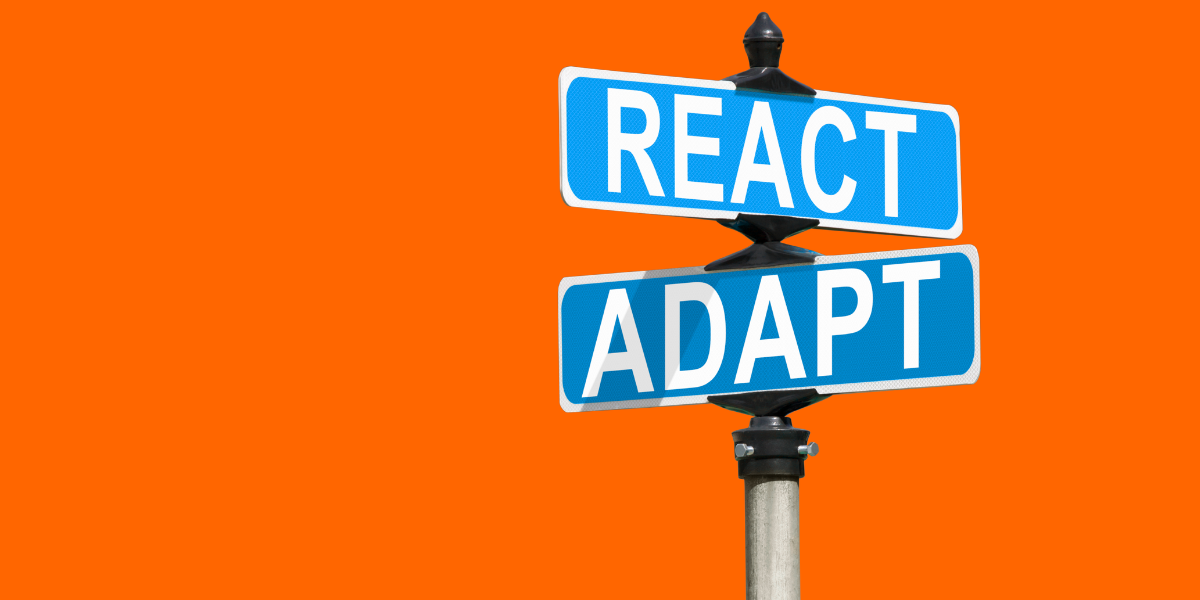
In business, one of the hardest decisions is not defining a strategy, but deciding whether to stick with it or change course. The line between persistence and stubbornness is thin, and crossing it at the wrong time can be costly.
Finding the Right Balance
In recent years, the concept of pivoting—popularized by Eric Ries—has encouraged entrepreneurs to test, learn, and adapt quickly. At the same time, traditional strategy reminds us that consistency and long-term thinking are essential for building sustainable businesses.
So, what’s the right balance?
The answer lies somewhere in between.
When Persistence Makes Sense
Persistence is critical when there are signs of progress, even if results are not immediate. Many successful companies took time to find their product-market fit. Airbnb, for example, struggled in its early stages, refining its approach multiple times before scaling globally. If the founders had pivoted too early, the outcome might have been very different.
When It’s Time to Pivot
On the other hand, pivoting becomes necessary when key assumptions prove wrong. Instagram started as a more complex app called Burbn. After observing user behavior, the founders realized that the photo-sharing feature was the most valuable element. They simplified the product and focused entirely on that. That decision changed everything.

Evidence Over Emotion
The key difference is not time, but evidence.
Blind persistence often comes from emotional attachment rather than data. Strategic persistence, however, is grounded in learning. As Steve Blank argues, startups fail not because they lack effort, but because they execute plans without validating whether customers actually want what they are building (Blank, 2013).
The Role of Structured Experimentation
This is where structured experimentation becomes essential.
Instead of asking “Should we continue or quit?”, a better question is: “What are we testing, and what would make us change direction?”
Setting clear hypotheses, defining success metrics, and establishing reasonable timeframes for experiments can transform decision-making. It reduces uncertainty and replaces intuition with informed judgment.
Time, Signals, and Decision-Making
Another important factor is time allocation. Not every initiative deserves the same level of patience. Some ideas require longer cycles to mature, while others should show early signals. The challenge is to differentiate between temporary friction and fundamental flaws.
Companies that master this balance treat strategy as a dynamic process rather than a fixed plan. They commit to a direction, but remain open to change when reality contradicts assumptions.
A Practical Framework
In practice, this means:
• Persist when there is measurable progress and validated learning
• Pivot when core assumptions are disproven
• Experiment when the path is still unclear
Ultimately, success is not about being right from the beginning, but about learning fast enough to make better decisions over time.
References
Blank, S. (2013). Why the lean start-up changes everything. Harvard Business Review, 91(5), 63–72. https://hbr.org/2013/05/why-the-lean-start-up-changes-everything
Christensen, C. M. (1997). The innovator’s dilemma: When new technologies cause great firms to fail. Boston, MA: Harvard Business School Press.
Ries, E. (2011). The lean startup: How today’s entrepreneurs use continuous innovation to create radically successful businesses. New York, NY: Crown Business.
McGrath, R. G. (2010). Business models: A discovery driven approach. Harvard Business Review, 88(1–2), 54–60.
Denning, S. (2016). How to make the whole organization “Agile”. Forbes. https://www.forbes.com/sites/stevedenning/2016/07/23/how-to-make-the-whole-organization-agile/